
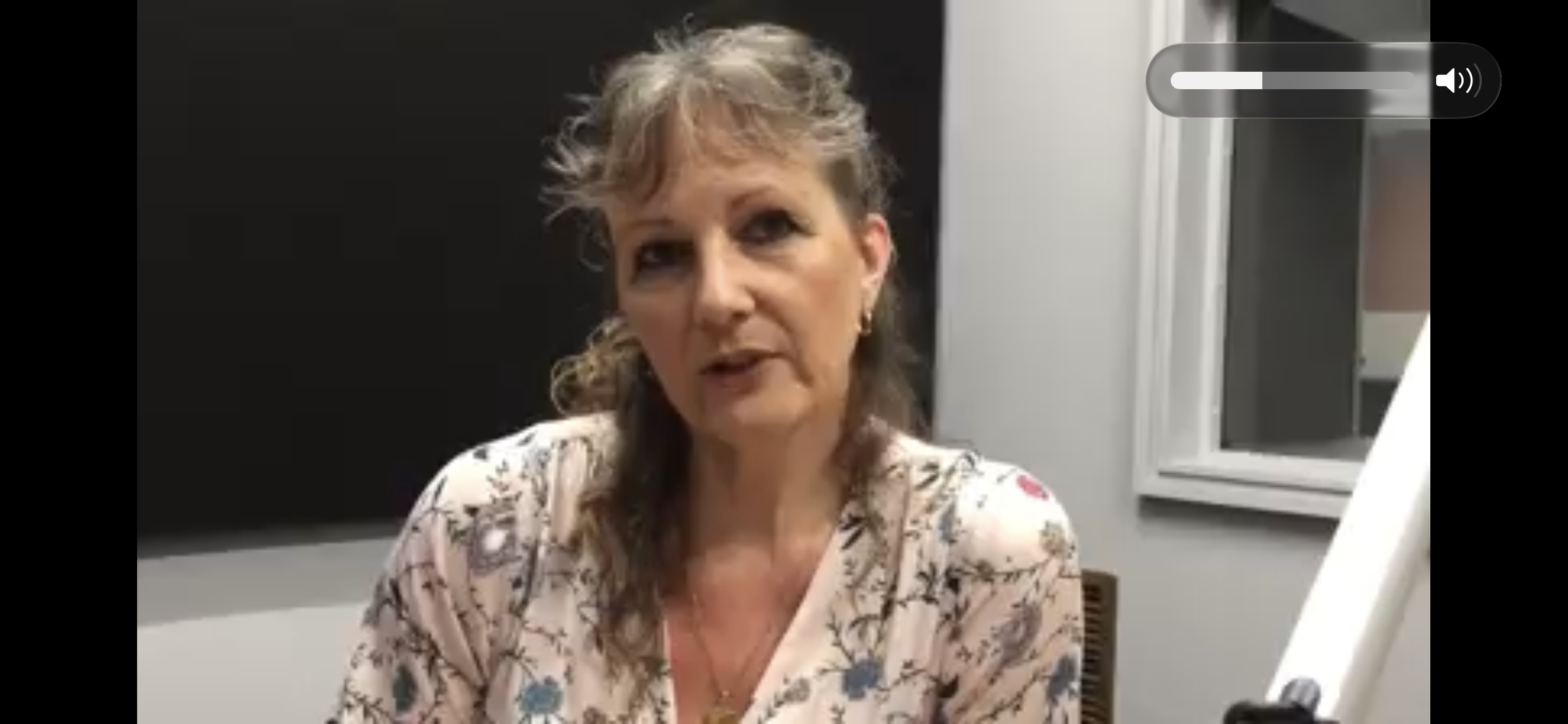
On 8 October, 2019, I was interviewed by Brian Vickery for Hokonui Radio Station.
I have added the transcription including timestamps below for your benefit, if you prefer to read rather than watch the video, or to help you understand my Dutch-Kiwi accent!
The 11-minute video sits below the transcription 🙂


Bryan [00:00:00] And it’s a pleasure to have in the studio, Ingrid van Amsterdam. Ingrid, congratulations on your third book, The Death and Birth of my Mother and I, An intimate Perspective. Ingrid, there’s nothing more visceral and personable than the passing of your mum. When did your mum die, and when did you publish the book?
Ingrid [00:00:21] So, my mother died mid-March, and that was after a very brief period of illness.
Nobody really knew that she was sick. And that included herself. I kind of found out at the end of writing the book.
She looked very well. She was, I mean, she was 83. You would never have thought that she was 83. She was vivacious and energetic, and she did lots of things. She used to go for walks and go out and swim and whatever she did, and so, she looked well. As she was 83, obviously it was natural that she got a little bit more tired, I mean, but that’s normal. But she even went to India for a month.
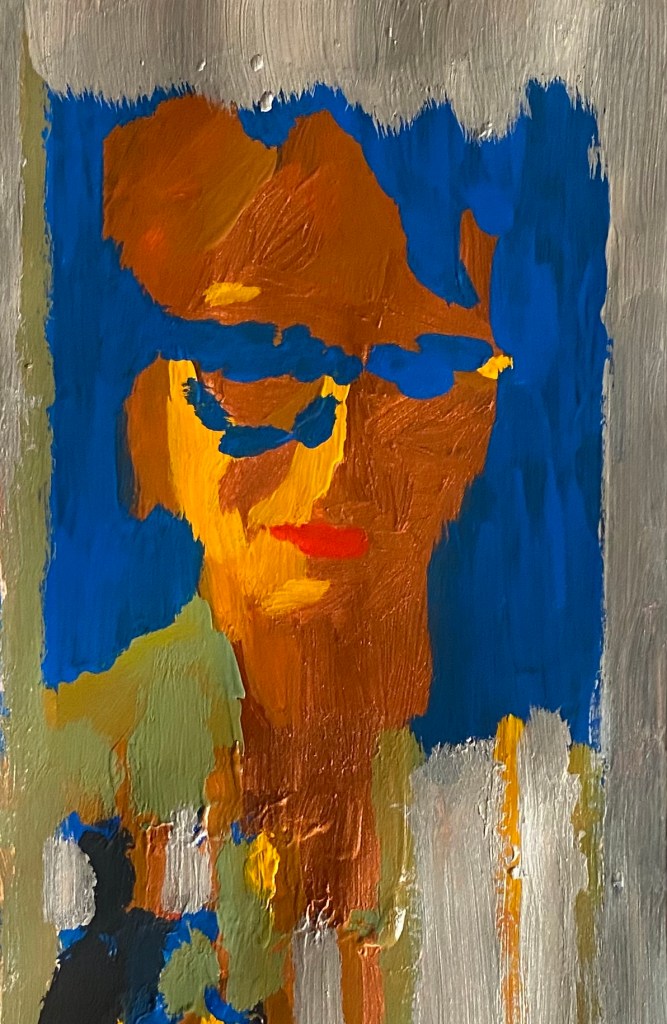
Bryan [00:01:04] And a good artist as well. And I’ll get you to hold up the book. And we’re going to see her stunning painting here. I mean, this is the cover of the book. Wow. That is, the Lady Horse. That’s a little bit of your mum’s artwork.
Ingrid [00:01:16] Yeah.
Bryan [00:01:16] And that is absolutely stunning.
Ingrid [00:01:19] So I actually thought to put it on the cover because she mentioned the painting in her diary. And, you know, I actually used her diary as the foundation for writing the book just to see what I could find out about her death and the process that went past.
Bryan [00:01:37] So you’ve written a non-fiction book, 78 pages and four parts, covering 28 days.
Ingrid Yeah.
Bryan And it’s so practical. As a matter of fact it covers virtually everything, doesn’t it?
Ingrid [00:01:51] Yeah. Yeah, it’s, I would say, it’s a very good book for anyone, who has got a relative who, you know, an older relative, somebody who is sick, someone who’s got terminal illness. Even, the hospice have already – the local hospice where my mom was volunteering – have already shown interest. And also the funeral home said they really want some copies to show to their clients as well.
Bryan [00:02:16] So that definitely is your your target. You’ve just written with such sensitivity. It’s matter of fact. You haven’t over, or embellished it, or in any way. And of course it’s anonymous. You don’t mention your name. There’s, there’s, you don’t identify the time or the place. So in some ways it’s anonymous, but it’s got, can I use the word ‘universal relevance’.
Ingrid [00:02:37] It’s anonymous but it’s very personable. Yeah. And I, I kept it anonymous deliberately and I deliberately kept dates out because I know that it’s going to be relevant no matter what year you’re going to read it. And it’s always going to be a very useful book for anyone. Whether that’s someone, an older person themselves to actually to find, or reassurance that actually dying is not scary.
Bryan [00:03:03] Much of the book is based on daily diaries from you and your mum.
Ingrid Yeah.
Bryan Exploring the miracle of dying. Can you elaborate and elucidate on what you mean by that? The miracle of dying?
Ingrid [00:03:13] Yeah. So, I found, you know, being present with my mother during that whole process – her transition between life and death – I found that very miraculous in itself. Just as much as I find birth a miracle.
I felt it – I compared it because I was able to compare it because the way she was handling herself. It made me feel like, personally, like I was in labour, you know, and the same, yeah, she went through a similar process, and it was just a miracle. I mean, it’s a miracle when a baby is born just as much as when someone steps out of out of the world and suddenly they’re not there anymore.
Bryan [00:03:57] So your mum had a melanoma?
Ingrid [00:03:59] Yes.
Bryan [00:03:59] So, yeah, 28 days. I want to share a quote that you’ve got which touched me.
‘… just as the birth of a baby is a miracle and it will never cease to amaze me. I think about the notion of the mind agreeing with spirit that the body has to go.’
Ingrid [00:04:17] Yeah, well there was that is actually something that I have come to the conclusion of that, you know, everything is a choice and you can step out of life. I think she really wanted that. It was not easy, but it was quick.
Bryan [00:04:33] But what I liked about the book, I mean, you do natural healing and your mum was amazing and she had her spirituality and went to India. But at the end of the day, sadly, she died. And the book is so practical. It’s almost like, if you want to, a textbook that covers everything from, respite care to a cremation to the funeral, every imaginable part of looking after someone when they’re dying. And that’s where I think it’s very, very valuable. But it still is personable. And it’s got your worldview and your core values. Yeah, everything and diet as well.
Ingrid [00:05:08] And diet, I mean, I mean, nobody expected my mother to die because she was so health-conscious. She always, I mean, I remember when she was 39, she decided to stop smoking. And then she said, “I’m gonna add ten years to my life because I stopped smoking.” And then she cut out alcohol and meat and everything. So she did that whole routine of the whole vegetarian routine and just pure living.
So all our family, we were very surprised, you know, when it actually happened. Yeah. Very surprised.
Bryan [00:05:46] It’s got poetry and it’s got art in it. Can I get you to read the beautiful poem on page 22. Is this the one you wrote?
You wrote this for your mum?
Ingrid [00:05:56] I wrote this, I didn’t write it for my mum, but I wrote it, exactly – actually, when I read it to her, she was visiting me in mid-February. And on the day of her leaving this poem came up, because I’d written it exactly eight years ago. And so I read it to her because it was quite important, I think, because of the conversations that we’d had around dying and light and going into the light, so, and then it was just so appropriate to read it to her.
Bryan [00:06:28] I’ll get you to share that.
Ingrid [00:06:30] Okay.
I’m a Light Being. At the speed of light I travel on my light beam through time infinite and beyond. Light is where I left and light is where I’m going, while in the meantime, on my lightway I light up all there is, with my eyes, my hands, my voice, my heart. I radiate and penetrate the positive, the negative (as one they live). I shine, and all my love I give.
Bryan [00:07:08] Mmmmm. Your book covers everything. It’s so practical. From morphine to, dealing with undertakers. Cremation.
Ingrid [00:07:19] Yeah, well, actually, yeah.
Bryan [00:07:23] Body movements. But the fact that I was – okay, I’ve done chaplaincy and I’ve, I’ve done funerals and I’ve been a clergyman, but it’s not my thing, you know, the respite giving. And I was able to read the book and I thought, jeez, this is really valuable, Ingrid, congratulations.
Ingrid [00:07:39] Thank you.
Bryan [00:07:39] Yeah. So I think it’s the fact that you’ve got a matter of fact style, but it’s got that little bit of spirituality in poetry and art. Yeah. Which kind of makes it special. So it’s it’s just not a text book, is it?
Ingrid [00:07:52] No. And it gives you the opportunity to actually relax and be open about the whole subject, because it isn’t everybody’s cup of tea. And it’s sometimes a difficult subject to talk about, especially when it’s so close to your heart. But, you know, I found it really nice that I was able to talk openly and freely with my mother about it before she, I mean, a month before she died. And so we discussed that whole, the possibilities of what could happen and what actually happened when she – when I read that poem to her, she said to me, “have I shown you my SOS thing that I’ve got in my wallet?” And I said, “no.” And so she had this thing, piece of paper all folded up, really small in her wallet, and it was kind of like a first aid thing in case anything happened to her. And I said, “would you like to read it to me? So just to make sure you still agree with everything you wrote.” And she’d had it in her wallet for probably 30 years or so. And and it was also about if anything happened to her. ‘Do not resuscitate me. Don’t give me any medication.‘ And she said, “but morphine is okay.” So but I never thought I’d ever have to do it and, eventually I did.
Bryan [00:09:02] Ingrid, people can get it through Amazon. What feedback have you had so far from people in different sectors? What are they saying about your book? Those people that have been privileged to to have a sneak, a sneak preview?
Ingrid [00:09:13] Yeah. So it’s just very easy to read. I had a registered, a clinical nurse who read it who, who really actually thought it was going to be valuable for hospice. Also, hospice gave me feedback that it would be very good for them because it was actually written from a relative’s perspective. And then, of course, it’s a mother-daughter relationship. So you can actually read also about how the relationship changed between myself and my mother in that whole process.
Bryan [00:09:46] Yeah. And I think certainly, it’s, it’s encoded with spirituality and some nice philosophy which is not overdone, which I enjoyed as well. So the call to action, how can we get a copy of your book, The Death and Birth of My Mother and I – Google what?
Ingrid [00:10:05] So you can go to Amazon.com and just type in The Death and Birth of My Mother and I, or you can go to my author page. It’s just called Ingrid van Amsterdam.
Bryan [00:10:15] Can I get you to close with – I think this may have been at your mum’s funeral; she did have a, a wonderful philosophy and an outlook on life and her own spirituality. Can you share the poem? I think it’s on page 71. In closing, I think that would be nice, because this brought healing and a lot of comfort, and this touched people’s heart. And this pretty much captures, the core values and the spirit and the outlook of, of your mum. Thank you Ingrid.
Ingrid [00:10:42] Yeah. So I’ll read you the Hindu version first. So this is the Gayatri mantra that we used, that we listened to for almost the entire time I was looking after her, and then during the viewing and also the funeral.
So we’ll start with the Hindu;
Om Bhur Bhuvah Swah, Tat-savitur Varenyam, Bhargo Devasya Dhimahi, Dhiyo Yonah Prachodayat.
And that means: We meditate on that most adored Supreme Lord, the creator, whose effulgence (divine light) illumines all realms (physical, mental and spiritual). May this divine light illumine our intellect.
Bryan [00:11:32] Ingrid it’s been lovely to catch up with you. And congratulations on your book. And I’m sure it’s going to be, efficacious and beneficial for many people. Thank you so much.
Ingrid [00:11:42] My pleasure, thank you very much.


Share your thoughts